Set and left alone
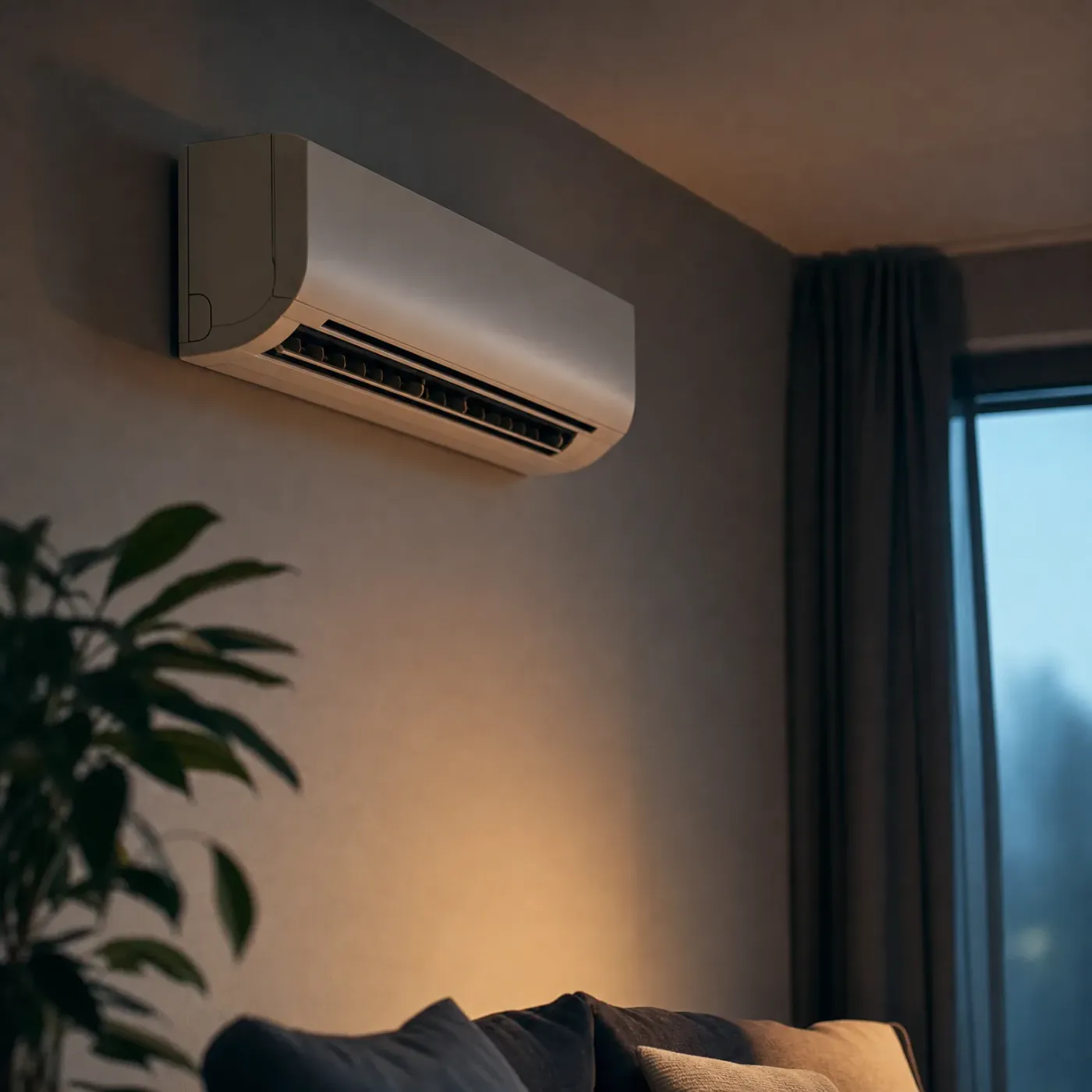
A mini split that holds one heat setting runs quiet and even, and the coil behind that vent stays clean enough to put out steady warm air. This is what a mini split looks like when nothing's been skipped.
The right pro for this job
Most mini splits in Montana are backup heat, not the main source, so the right setting depends on how yours is actually set up alongside your gas furnace. This page gets into temperature settings, mode choices, and when a mini split starts losing ground to real cold. If yours needs a look, a local contractor who services this equipment can weigh in on your setup specifically.
Connect with a proSet a mini split to heat mode, somewhere around 68 to 70 degrees, and let it run steady instead of cycling it on and off. A mini split works hardest to recover from a cold start, so holding one temperature uses less energy than letting the house drop and asking it to catch up. In a Montana winter, the bigger issue is the outdoor unit itself. Once outdoor temperatures drop into the teens and below, most mini splits lose capacity and have to work harder for the same heat, and some will struggle to keep up at all once it's well below freezing. That's why most homes here run the mini split alongside a gas furnace rather than on its own. If yours is set up that way, the furnace is what should be carrying the house on the coldest nights, with the mini split handling the milder days in between. Check the outdoor unit for ice or snow blocking the coils, since that's usually the first sign it's losing ground to the cold.




You've noticed the air coming out feels cooler than usual once a hard cold snap sets in, and the unit seems to run constantly without really catching up. You're not imagining it. A mini split doesn't fail outright in cold weather, but it does less work for the same effort as the temperature outside drops, and that shows up as the room never quite feeling warm enough.
A mini split doesn't make heat the way a furnace does. It moves heat from the outdoor air into the house using a refrigerant cycle, the same system working in reverse of how it cools in summer. The colder the air outside, the less heat there is to grab, so the compressor has to work harder to deliver the same warmth indoors. Most units also run a defrost cycle below a certain outdoor temperature, pausing briefly to clear frost off the outdoor coil before switching back to heating. That's normal and not a sign anything's broken. It's also why most homes in Montana run a mini split alongside a gas furnace rather than relying on it alone once temperatures drop into the single digits or below.

A mini split that holds one heat setting runs quiet and even, and the coil behind that vent stays clean enough to put out steady warm air. This is what a mini split looks like when nothing's been skipped.

That grime along the vents is more than dust. It builds up on the coil and filter until the unit can't move air the way it should, and in a Montana winter that's the difference between backup heat that helps and one that just runs without doing much.
You turn it up and the room still feels cool an hour later. The air coming out is warm but not hot, and the outdoor unit runs almost nonstop once it gets cold. Some mornings you notice frost built up on it that doesn't melt off between cycles. You might hear it click on and off more than it used to, or notice the room near the furnace stays warmer than the room the mini split is supposed to cover. None of that means it's broken. It usually means the unit is working harder than it should to hold a temperature it could hold easily with less effort. Left alone through enough winters, that extra strain is what wears out the parts that keep it running at all.
Outdoor air passes over the outdoor coil, where refrigerant pulls heat from it
Refrigerant carries that heat inside and releases it through the indoor coil
The indoor fan pushes air across that coil and into the room
A reversing valve switches the cycle so the unit can also cool in summer
At under 13 cents a kilowatt-hour, running your mini split steady through a Montana winter costs less than you'd guess, since it moves heat rather than generating it like your furnace does. That's part of why it makes sense as backup rather than something to ration.
EIA-861 2025 statewide residential average
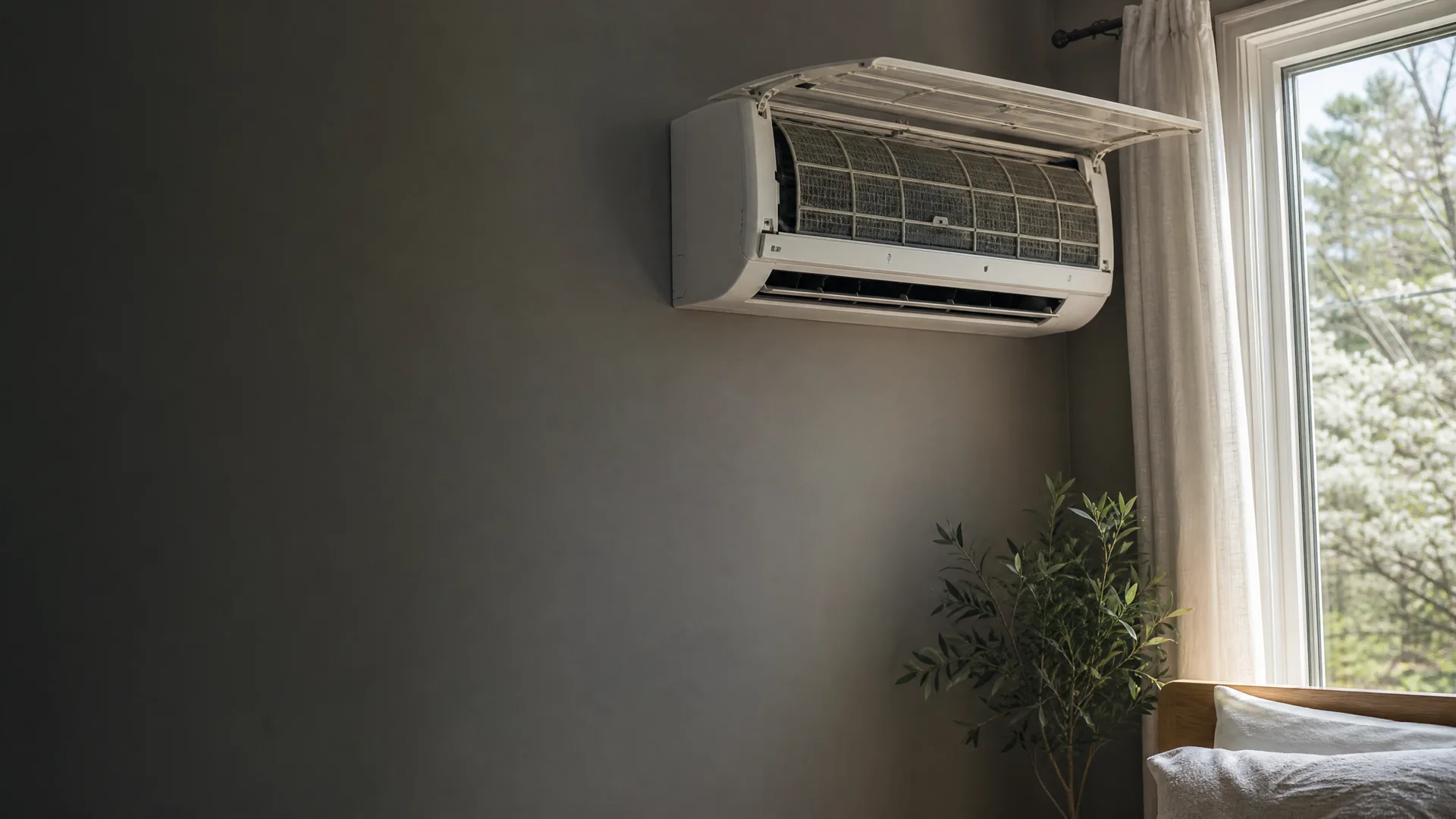
Late afternoon sun comes through the blinds while you're on your knees by the mini split, checking it before the first real cold hits. The front cover is up and the filter screen is out, coated grey with a winter and summer's worth of dust. You run a thumb across it and the mesh barely shows through. This is the unit you've been leaning on more since the furnace alone couldn't keep the back bedroom even through last year's cold snaps. You set the screen on the carpet, meaning to rinse it, and start thinking about who around here actually services these things before you need it running hard again.
A licensed local pro takes the request for your mini split tune-up.
You only hire the pro if you want to.

Montana summers run dry, and the dew point across June, July and August averages just 44°F, which is low. That dry air is part of why your mini split's coil stays cleaner through summer than it would in a muggy climate, but it also means the unit isn't doing much moisture removal, so almost all the work it does in winter is pure heating, not the back and forth between cooling and drying it would handle somewhere wetter. A mini split running in a dry climate like this leans harder on steady heat output, which is one more reason a held setting suits it better than one that cycles.
NASA POWER T2MDEW county cells weighted by homes



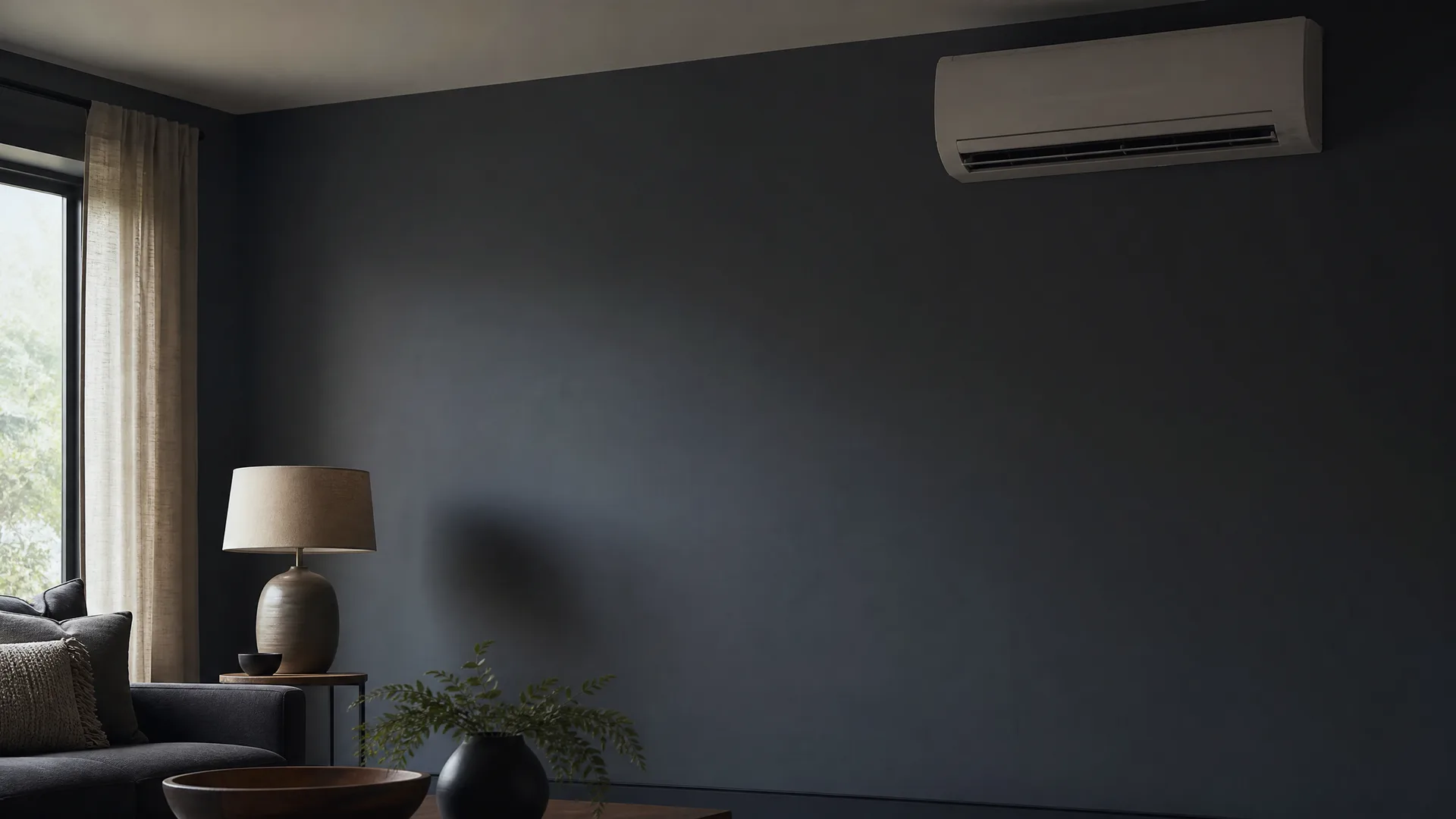
This is what a serviced mini split looks like going into winter. The casing stays white, the vents stay clear, and the unit can hold 68 to 70 degrees without straining. Set it and it keeps up even when the furnace is carrying most of the load.

That yellowing isn't just age. Dust on the casing usually means dust on the coil behind it, and a dirty coil can't pull heat from cold outdoor air as well as a clean one. The unit runs longer to reach the same setting, and in a hard cold snap it may not reach it at all.


A mini split doesn't make heat the way your furnace does. It pulls heat out of outside air and moves it inside, using a compressor that speeds up or slows down to hold whatever temperature you've set. That's why leaving it alone works better than adjusting it. Every so often, especially once it's cold, the outdoor coil frosts over and the system has to stop and run a brief defrost cycle to clear it. Warm air stops coming out of the indoor unit for a few minutes during that, which is normal and not a sign anything's wrong. The thermostat inside only knows the room temperature where it sits, so it'll keep calling for heat the whole time until that reading comes up to meet the setting. The indoor fan is smart enough to slow itself down rather than blow cool air at you while the coil is cold. None of this works right if the outdoor unit can't get clean airflow across its coil, or if the system has lost refrigerant somewhere along the line. A low charge isn't something you can just top off. It takes finding where it's leaking out first.



That's the whole setting. Pick a number in that range, put it in heat mode, and don't touch it again until spring. Your furnace will carry the load once it gets cold enough that the mini split can't keep up on its own, and that handoff works better when the mini split is holding steady rather than being adjusted up and down.
Where this ends up mattering is whether the unit is actually able to hold that number once a hard cold snap hits, and that comes down to whether the coil and filter are clean going into winter, not the thermostat setting. A local contractor who works on mini splits all season, through the dry summers and the cold months, knows which parts tend to fail first in this climate and what to check before the cold really sets in. If you get matched with one, it's a single contractor who services this equipment locally, not a list of names to sort through yourself.

Your request stays with one local pro.