Tell us about the job
Takes about a minute. No obligation.

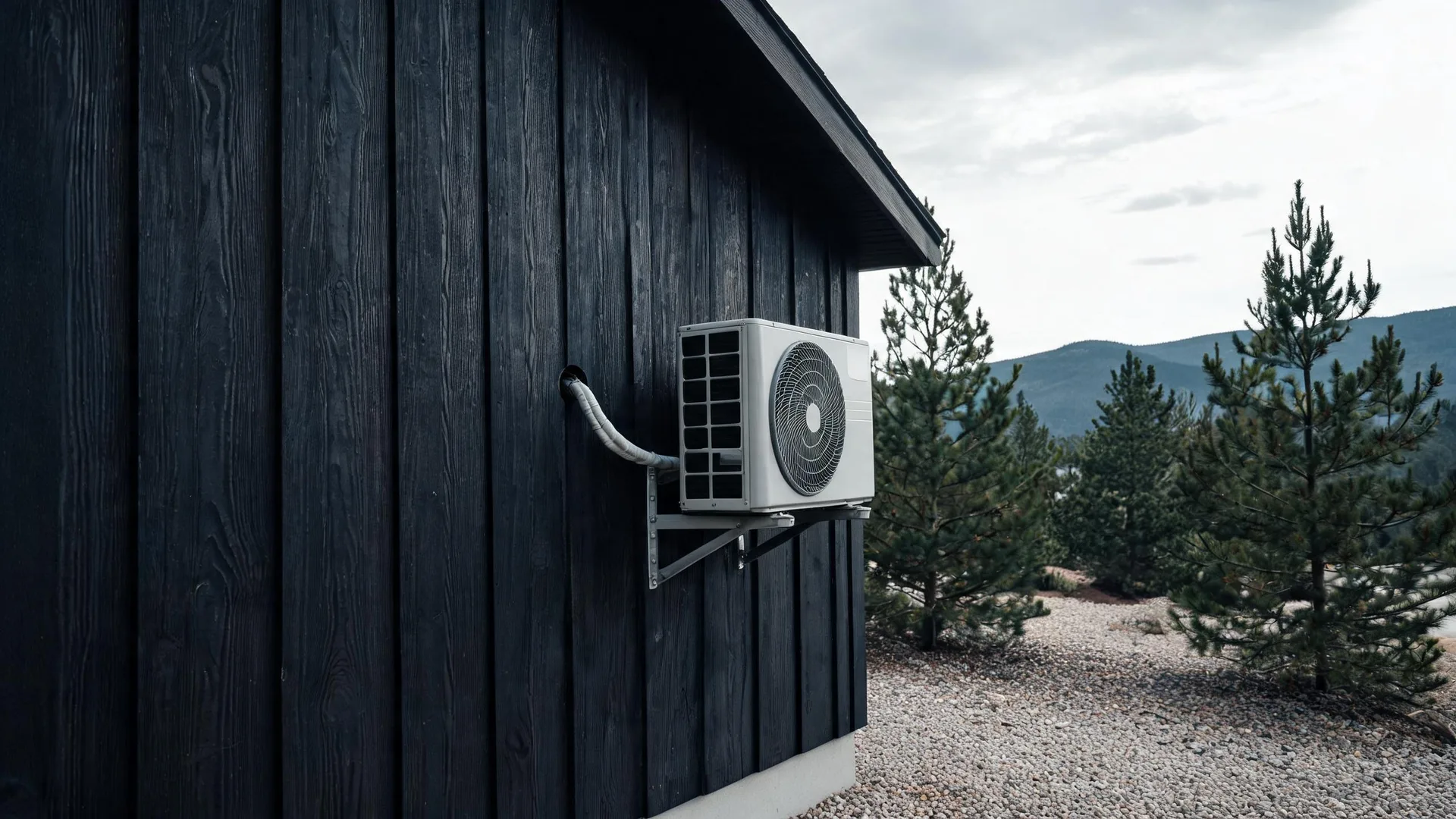
A mini-split sized for this area spends most of the year off. Homes in Big Horn County, MT run cooling about two months a year, from July through August. The compressor, condenser fan, and electrical contacts go months without cycling, and that idle time is where problems start: refrigerant seeps, contacts corrode, and drainage lines grow mold that nobody sees until July. A contractor quoting an installation here has to account for this, because a system that cannot survive a long off-season in good working order will fail on the first hot week it is called to run.
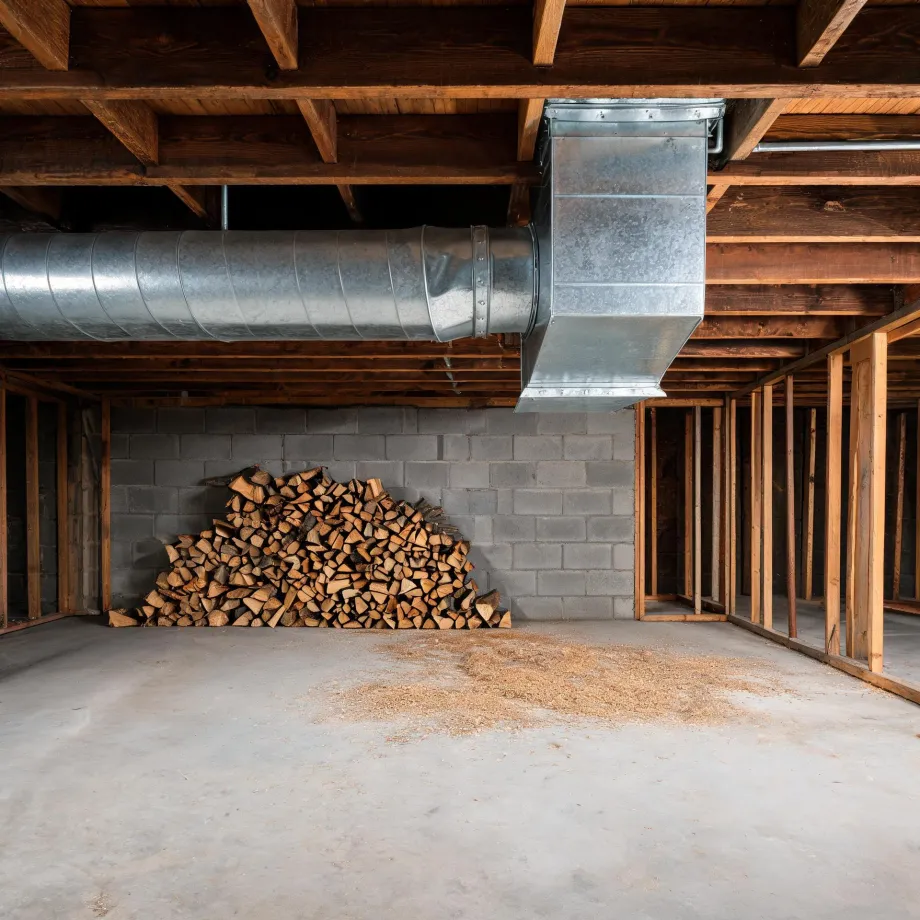
Ductwork and electrical panels do not age on the same schedule as the equipment installed in them, and in much of Big Horn County the gap between the two is wide. Half the homes in Big Horn County, Montana were built in 1976 or earlier (2020-2024 ACS 5-year). A house whose wiring was sized for an older heating system may not carry a modern mini-split without a panel upgrade, and that is what a contractor determines before the new equipment is ever ordered. The electrical assessment comes first because it sets the scope of everything else.
The Parts of a Mini-split System Involved in an Installation
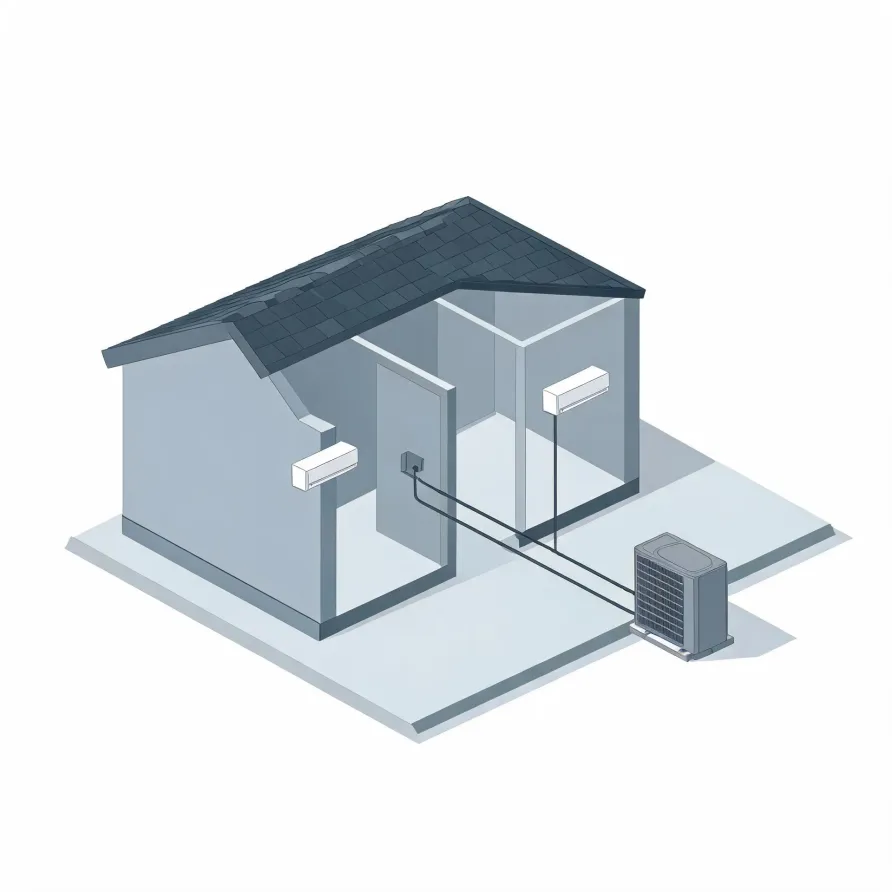
The indoor air handler mounts high on an interior wall of the room being served, where it draws in room air and delivers conditioned air back into the space. The outdoor condenser unit sits on the ground or a bracket outside the house and houses the compressor along with the main refrigerant components.
A refrigerant line set runs through a small penetration in the wall to connect the two units, carrying refrigerant between them. A condensate drain line runs from the indoor unit to the outside, removing moisture the air handler pulls from the air, and a dedicated electrical circuit ties into the system at both ends.
The drawing shows a representative layout of these components, and a licensed contractor determines exactly how they apply to your home's specific walls, rooms, and exterior.
Find a contractor in Big Horn CountyBig Horn County, MT, by the numbers
231 severe weather events were recorded in Big Horn County, Montana between 2015 and 2024.
NOAA National Centers for Environmental Information, Storm Events Database, bulk CSV export, events 2015-01-01 through 2024-12-31.Half the homes in Big Horn County, Montana were built in 1976 or earlier (2020-2024 ACS 5-year).
U.S. Census Bureau, 2020-2024 American Community Survey 5-Year EstimatesBig Horn County, Montana holds 4,527 housing units (2020-2024 ACS 5-year).
U.S. Census Bureau, 2020-2024 American Community Survey 5-Year EstimatesOwners occupy 66.7% of the occupied homes in Big Horn County, Montana (2020-2024 ACS 5-year).
U.S. Census Bureau, 2020-2024 American Community Survey 5-Year EstimatesMini-Split Installation Rules and Standards for Big Horn County, Montana2 sourced regulations and standards
Contractor Rules in Big Horn County, Montana
Montana’s contractor licence does not reach a casual, minor or inconsequential job whose total price for labour, materials and everything else is less than $2,500 — and the exemption is lost if the work is only part of a larger operation, or if a job is divided up to get under the figure.
Montana requires a current construction contractor licence from the Department of Labor and Industry: an individual or business may not engage in business as a construction contractor without one.
Severe Weather Events in Big Horn County
Weather in Big Horn County puts real demands on heating and cooling equipment, and those demands shape what a mini-split system needs to handle year after year. Sizing and installation decisions that ignore local conditions leave a system working against its own environment.
231 severe weather events, 2015–2024. Source: NOAA National Centers for Environmental Information, Storm Events Database.