Tell us about the job
Takes about a minute. No obligation.
A compressor that sits unused most of the year and then cycles hard through peak summer heat is a different diagnostic problem than one worn down by continuous use. Homes in Roosevelt County, MT run cooling about two months a year, from July through August. After a long idle, seals dry, refrigerant can migrate, and a contactor that worked fine in September may not close cleanly when July arrives. A contractor diagnosing a refrigerant loss or a hard-start fault here checks for dormancy-related failure before assuming the compressor has simply aged out.
Parts availability is what shapes a mini-split repair call here more than anything else in the job. Half the homes in Roosevelt County, Montana were built in 1974 or earlier (2020-2024 ACS 5-year). A system installed into stock that old has likely been through at least one equipment cycle, and the refrigerants, control boards, and compressor components from earlier generations are not always in production. A contractor who opens a unit here checks what the system actually takes before pricing the repair, because a part that looks standard on a spec sheet can be discontinued or on long lead.
The Parts of a Mini-split a Contractor Checks During Repair
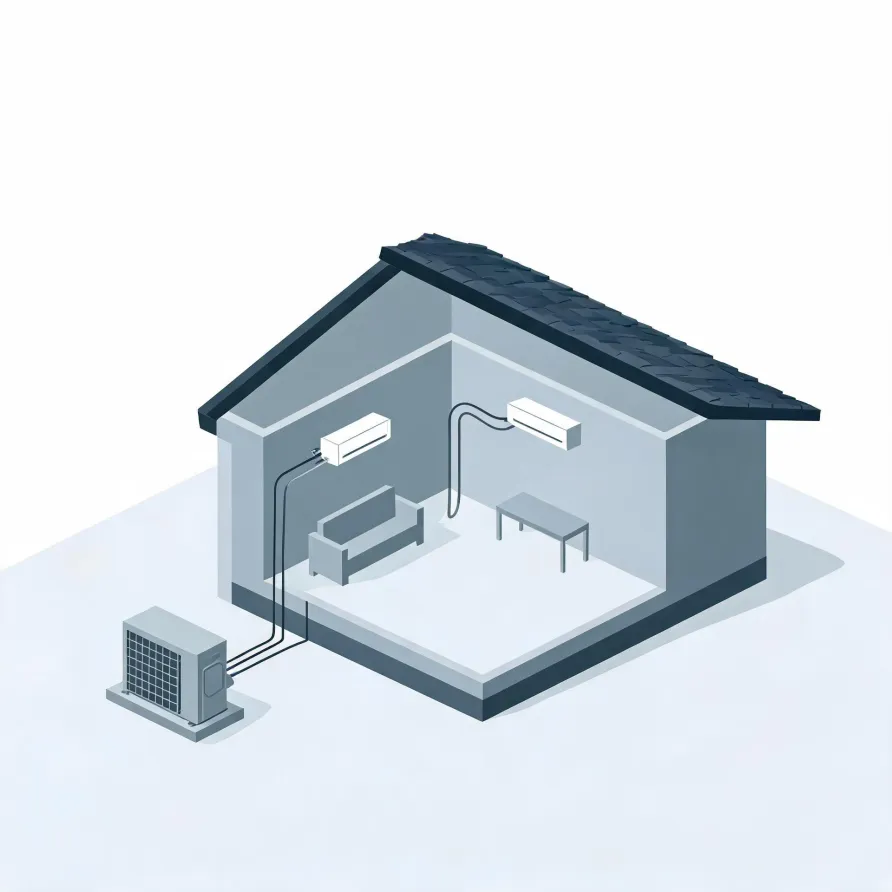
The indoor air handler mounts high on an interior wall and is the piece a homeowner notices first. It pulls room air across a coil and a blower, then returns conditioned air into the space. When something goes wrong inside the house, this unit is where a contractor starts: the coil, the blower wheel, the sensors, and the drain line each have their own failure patterns.
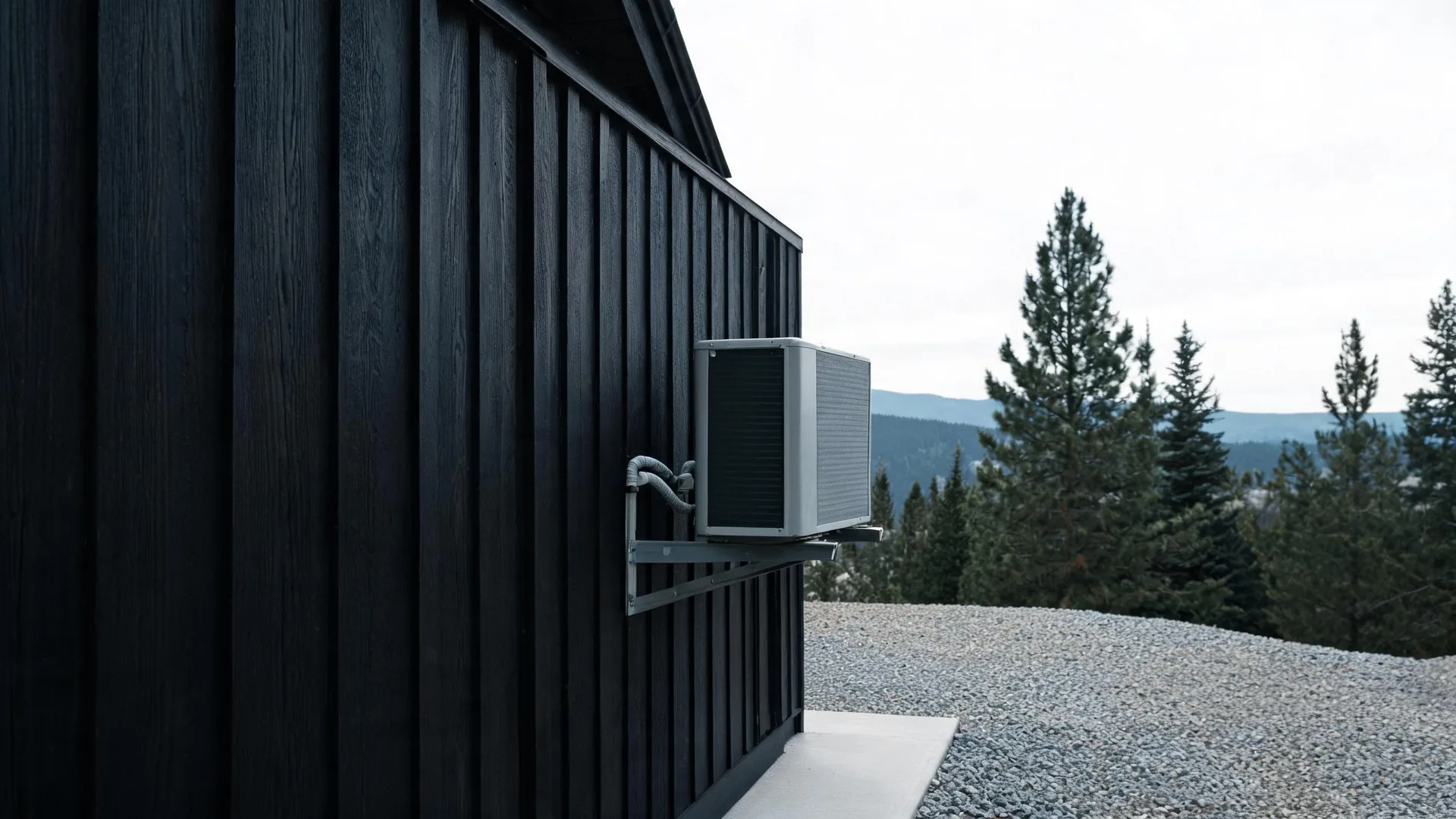
The outdoor condenser sits on a pad or bracket outside the house and holds the compressor, the second coil, and the fan that sheds heat to the outside air. A refrigerant line set and a control wire run through the wall to tie the two units together. Faults in the compressor, the capacitor, the outdoor fan motor, or the connections along that line set are the other common places a contractor traces a problem back to.
The drawing shows the general layout of a mini-split system, and a licensed contractor determines which components and configurations apply to your specific home.
Find a contractor in Roosevelt CountyRoosevelt County, MT, by the numbers
213 severe weather events were recorded in Roosevelt County, Montana between 2015 and 2024.
NOAA National Centers for Environmental Information, Storm Events Database, bulk CSV export, events 2015-01-01 through 2024-12-31.Half the homes in Roosevelt County, Montana were built in 1974 or earlier (2020-2024 ACS 5-year).
U.S. Census Bureau, 2020-2024 American Community Survey 5-Year EstimatesRoosevelt County, Montana holds 4,066 housing units (2020-2024 ACS 5-year).
U.S. Census Bureau, 2020-2024 American Community Survey 5-Year EstimatesOwners occupy 66.6% of the occupied homes in Roosevelt County, Montana (2020-2024 ACS 5-year).
U.S. Census Bureau, 2020-2024 American Community Survey 5-Year EstimatesCodes & Standards Governing Mini-Split Repair in Roosevelt County, Montana2 sourced rules and standards
Licensing Rules for HVAC Repair in Roosevelt County, Montana
Montana’s contractor licence does not reach a casual, minor or inconsequential job whose total price for labour, materials and everything else is less than $2,500 — and the exemption is lost if the work is only part of a larger operation, or if a job is divided up to get under the figure.
Montana requires a current construction contractor licence from the Department of Labor and Industry: an individual or business may not engage in business as a construction contractor without one.
Severe Weather Events in Roosevelt County
Montana's climate puts real stress on heating and cooling equipment, and Roosevelt County's conditions are specific enough that local weather history belongs in any honest conversation about repair work. A mini-split that runs hard through difficult stretches wears differently than one that doesn't, and that pattern shows up in what breaks and when.
213 severe weather events, 2015–2024. Source: NOAA National Centers for Environmental Information, Storm Events Database.