
Running clean
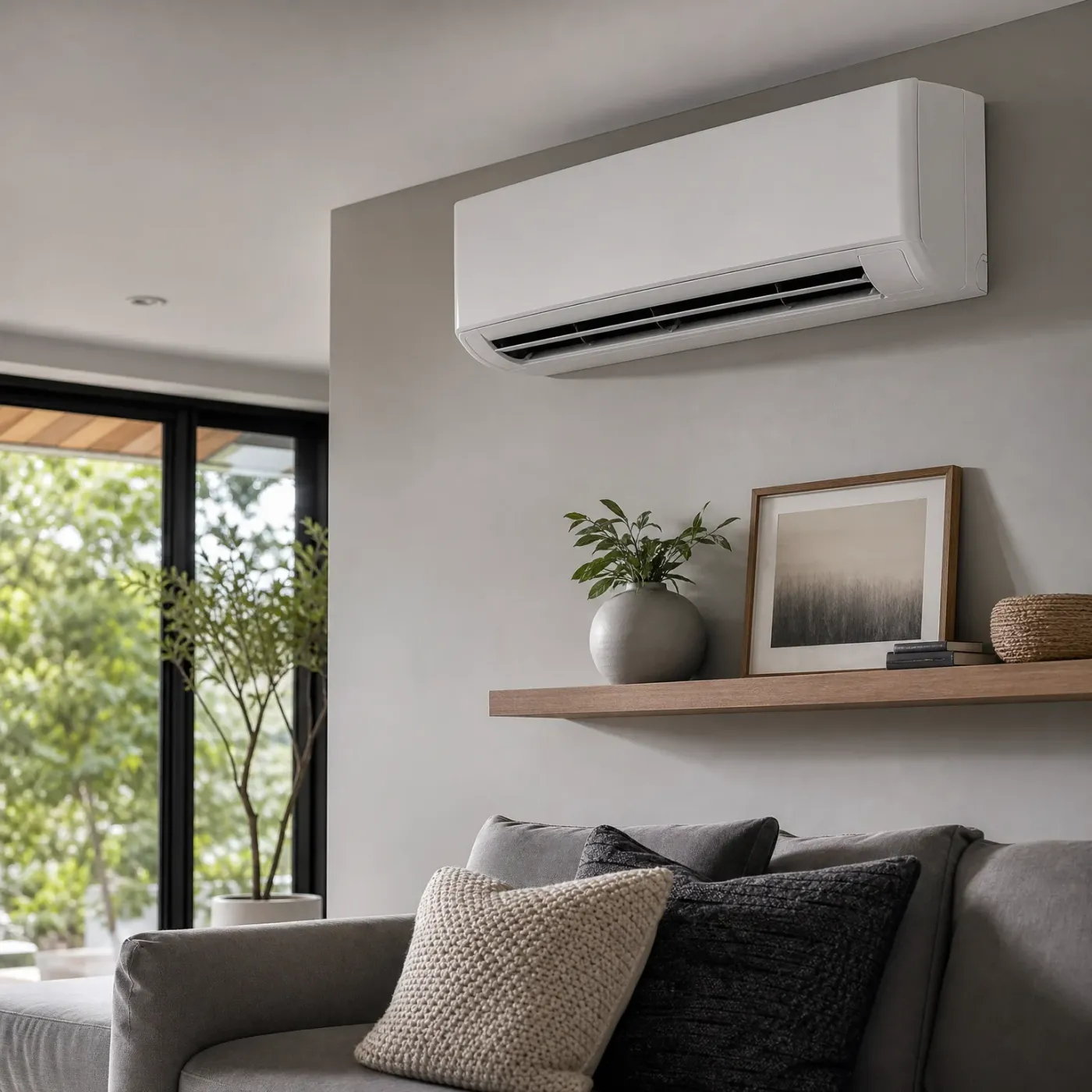
This is what a mini split should look like doing its job. The cabinet is clear, the vane swings open, and the condensation drains out through the line set the way it's built to. No drip, no towel on the floor.
A mini split dripping water onto the floor or wall in the middle of a Montana winter feels backward. Water usually means summer and condensation, not January. You've probably checked that the unit is level and the drain line isn't visibly blocked, but the leak keeps showing up anyway, and you want to know what's actually causing it before it damages the wall or floor underneath.
In cold weather, a mini split running in heat mode can still pull moisture out of the air inside the indoor coil. That water is supposed to drain out through the condensate line, but if the line runs through an unheated space or near an exterior wall, the water inside it can freeze. Once ice blocks the line, condensate has nowhere to go but back into the unit, and it drips out through the front or the bottom instead. Montana winters push outdoor temperatures low enough, and run the heat long enough, that a drain line without enough slope or insulation freezes more easily than it would somewhere milder. A contractor can check the line's pitch, clear the blockage and confirm the unit is draining the way it should.

Wrong season, wrong symptom, but here it is anyway: a wet streak under the indoor unit in your home office, a towel already down on the floor. It's the middle of winter outside, but this looks like a summer problem, the kind you'd expect in July when the AC is working hard. You touch the wall. Cold and damp. You look up at the unit, half expecting to see ice, but there's none. Just the drip, steady enough that the towel's soaked through by afternoon. You've got work to do at that desk, and now you're working around a bucket instead, checking it every hour so it doesn't overflow onto the floor you just had redone.
The drip usually traces back to the line set, the pair of pipes running from the indoor head to the outdoor unit through your wall. Cold refrigerant inside those pipes meets warmer, moist air inside your house, and water forms on the outside of the pipe instead of the inside of the unit. If the insulation on that line has gaps, worn spots, or was never sealed tight where it passes through the wall, that moisture finds its way in and drips down the indoor unit or the wall behind it. You might notice the wall itself feels damp or see a stain spreading near the wall sleeve. Left alone through a Montana winter, that moisture can soak into drywall and framing, and nobody wants that showing up behind a wall they can't see.

This is what a mini split should look like doing its job. The cabinet is clear, the vane swings open, and the condensation drains out through the line set the way it's built to. No drip, no towel on the floor.

Dust and grime on the cabinet usually mean the filter behind it is just as dirty. A clogged filter can ice the coil, and when that ice melts, it melts faster than the drain can carry it off, so it finds the wall instead.




Send the request today and let a mini split pro reach out to you.
A local pro who knows mini splits gets your details and gets in touch.
It costs nothing to send, and you don't have to hire anyone.


A line set wrapped in foam sleeve insulation keeps the cold pipe from ever meeting the warm air inside your wall. That sleeve wears thin over the years, or it gets torn during a filter change or a move, and once there's a gap the cold metal is exposed again. Montana winters push that temperature difference further than a mild climate would, so a worn spot that might stay dry in October starts sweating hard by January. The fix is the same piece of foam, replaced.
A dirty filter or a low refrigerant charge can let frost build up on the indoor coil instead of normal condensation. The unit keeps running, and that ice keeps growing, layer on layer, until it's thicker than the drain pan was ever meant to handle. Turn the system off or let the room warm up and that ice melts all at once. That's why a leak sometimes shows up heaviest right after the mini split cycles off, not while it's running, and why the puddle can be bigger than the drip ever looked.


A towel under the unit soaks it up and the floor stays dry. That buys you a few days, not the rest of winter, before the drain line or the ice behind it gets worse.
Water tracking down drywall or pooling near the baseboard in your home office won't wait on your schedule. That's wood and wallboard sitting wet, and it calls for a look sooner than later.
At 12.99 cents a kilowatt-hour, running a mini split in Montana doesn't cost much, so there's no reason to shut yours off while it's leaking. Leave the power on and get the drain or the ice behind it looked at properly.
EIA-861 2025 statewide residential average
The water showing up under your mini split in January isn't a mystery once you trace it back. It's the line set, a clogged drain, or ice built up behind the coil, and none of those fix themselves in a Montana winter. The towel on the floor is doing its job for now, but it isn't doing anything about the cause. Once someone's looked at the drain line and the insulation on that line set, the leak stops being something you manage and goes back to being something that's just fixed. You don't have to figure out which of those three it is, or find the right person for it. Send the form and that part is off your plate. Keep the power on, keep the towel down if you need it, and let someone who does this for a living sort out whether it's ice, a clog, or worn insulation behind your wall.

Matched to your mini split job



