Why your mini split won't turn on in a Montana winter

Step 1 of 3: Equipment

Why won't my mini split turn on when it's freezing out?

Cold snaps in Montana can drop well below zero, and a mini split that worked fine last week suddenly won't power on at all. When the person you're keeping warm is counting on that heat, it's worth knowing right away whether this is normal cold-weather behavior or something that needs a repair call.

Most mini splits lock out below a certain outdoor temperature to protect the compressor

A mini split that won't start in a hard freeze is often doing what it's built to do. Many units have a low ambient cutoff, and once the outdoor temperature drops far enough, the control board won't let the compressor start. That's not a sign it's broken. It's a safeguard against trying to run oil that's too thick and cold to circulate. If yours sits unprotected from wind on a north wall, or the outdoor unit is buried in snow or ice, that makes the cutoff more likely to trip on a night that wouldn't otherwise be a problem. If it still won't run once temperatures climb back up, or the outdoor unit is iced over and not defrosting on its own, that points to something a repair can fix rather than the cold itself.

A woman in a knitted shawl sits in a living room with a fireplace, shelves, a sofa with cushions, and a lamp by a bright window, looking off to the side.
A woman with long brown wavy hair in a green shirt over a white top stands in a living room with built-in white shelves, a ceiling fan, a potted plant and a sliding glass door.
A woman with shoulder-length gray-streaked hair in a light gray knit sweater stands smiling and looking off to the side in a living room with a sofa, houseplant, framed picture, and sunlit sliding glass door.
A woman with shoulder-length curly gray hair wearing a gray knit sweater stands near a window with a sheer curtain, looking to the side, with a blurred interior room behind her.

Wait It Out or Call Now

Can wait for a technician

  • The outdoor unit is frosted or iced over but the indoor head still lights up when you press the remote.
  • You have gas heat backing up the house, so the rooms the mini split serves can get by on space heaters for a day or two.
  • The breaker hasn't tripped and the unit hums or clicks but just won't push warm air.
  • It's done this before in a cold snap and came back once temperatures climbed above zero.
  • You can see the outdoor unit is buried in snow or blocked by ice from a roof drip.

Needs a technician now

  • The indoor head is completely dark and won't respond to the remote or the wall switch at all.
  • You smell anything burnt or hear a loud clicking or buzzing from the outdoor unit before it shuts off.
  • The room this unit heats is the only heat source for someone who can't be moved to another part of the house.
  • Breaker keeps tripping every time you reset it, which points to a short or a compressor pulling too much current.
  • The outdoor fan isn't turning at all even when the unit is clear of snow and ice.
  • It ran fine through last winter's cold and stopped working the same week a hard freeze hit this time.
A white wall-mounted mini-split air conditioner indoor unit installed near the ceiling on a plain beige wall.

Why the cold shuts it down

A mini split pulls heat out of outdoor air, even air well below freezing. Below a certain point, usually somewhere around minus 15 to minus 20, the unit can't pull enough heat to keep the outdoor coil from icing over faster than its defrost cycle can clear it. Once the coil ices up badly, the control board shuts the system down rather than run it against a block of ice. That's a protective lockout, not a broken part, and it's the most common reason a mini split goes dead on the coldest nights of a Montana winter.

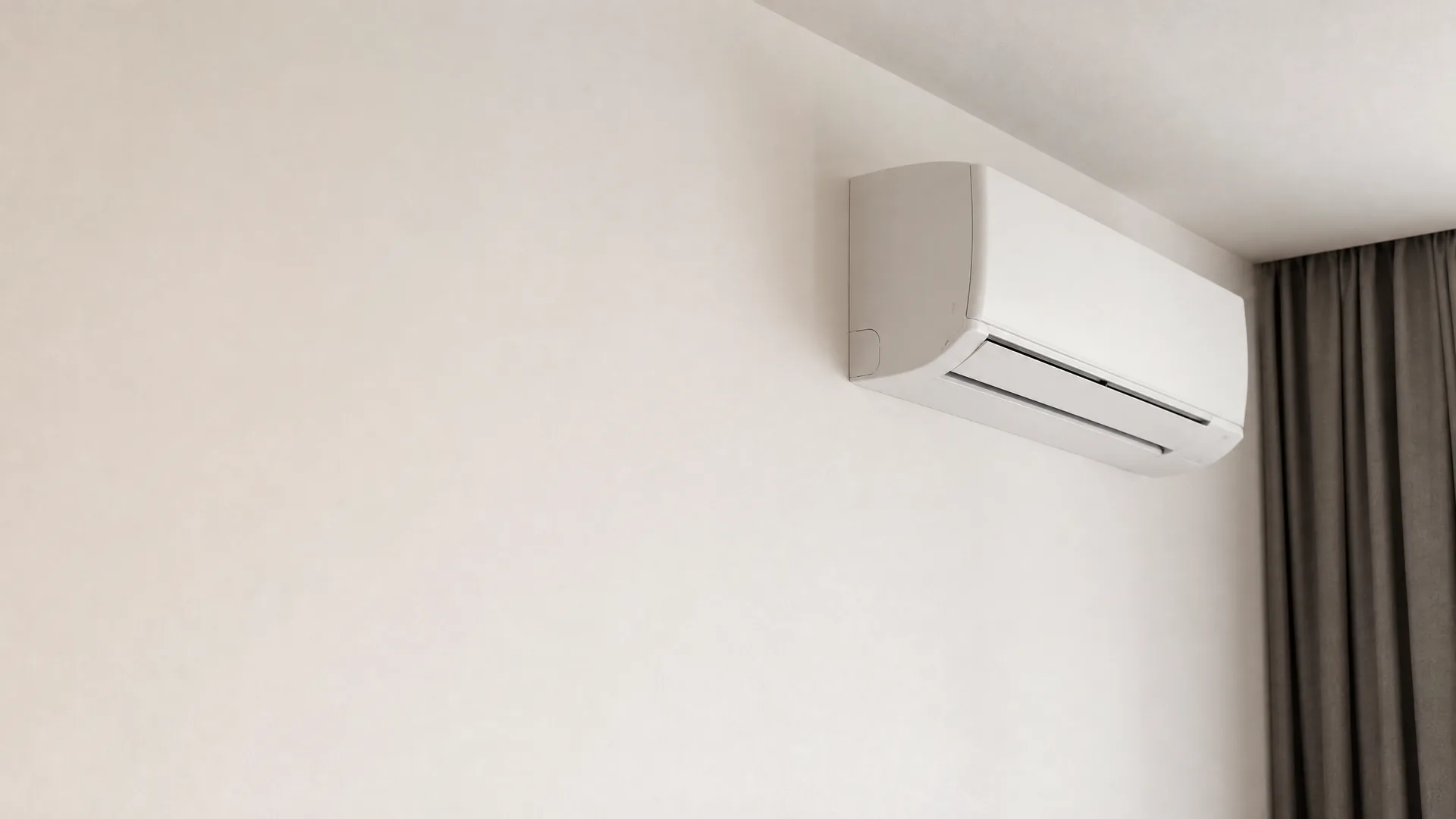
A white wall-mounted mini-split air conditioner on a plain off-white interior wall, with a gray curtain at the right edge.

What the compressor needs first

Before the compressor starts, a mini split runs the refrigerant through a warm-up cycle called a crankcase heater, keeping the oil in the compressor thin enough to circulate. If that heater has failed, or the unit sat without power during a cold stretch, the compressor can refuse to start even when you press the remote and the indoor head lights up. That split, a responsive indoor unit paired with total silence outside, is the clearest sign a contractor will look for first when the system won't run below zero.

What are you noticing in the house right now

You press the remote and nothing happens, or the indoor head blinks and shuts back off. Maybe you hear the outdoor unit try to start, then stop. The room it heats is cooling down faster than it should, and you can feel the draft near the floor where warm air used to be. Check the outdoor unit if you can get to it safely. A thick crust of ice across the coil or fan blades means it shut itself off rather than run damaged. If that room runs cold for more than a day, pipes along an exterior wall near that unit are worth checking, especially if nothing else in the house is heating that space.

A woman with her hair in a bun sits wrapped in a beige knitted blanket on a couch, holding a sleeping child against her chest in a warmly lit room with a lamp and houseplant in the background.
An older woman with short gray hair in a cream cable-knit turtleneck sweater smiles while looking to the side in a wooden kitchen, with a round loaf of bread on a board in the foreground and a lit candle by a dark window.
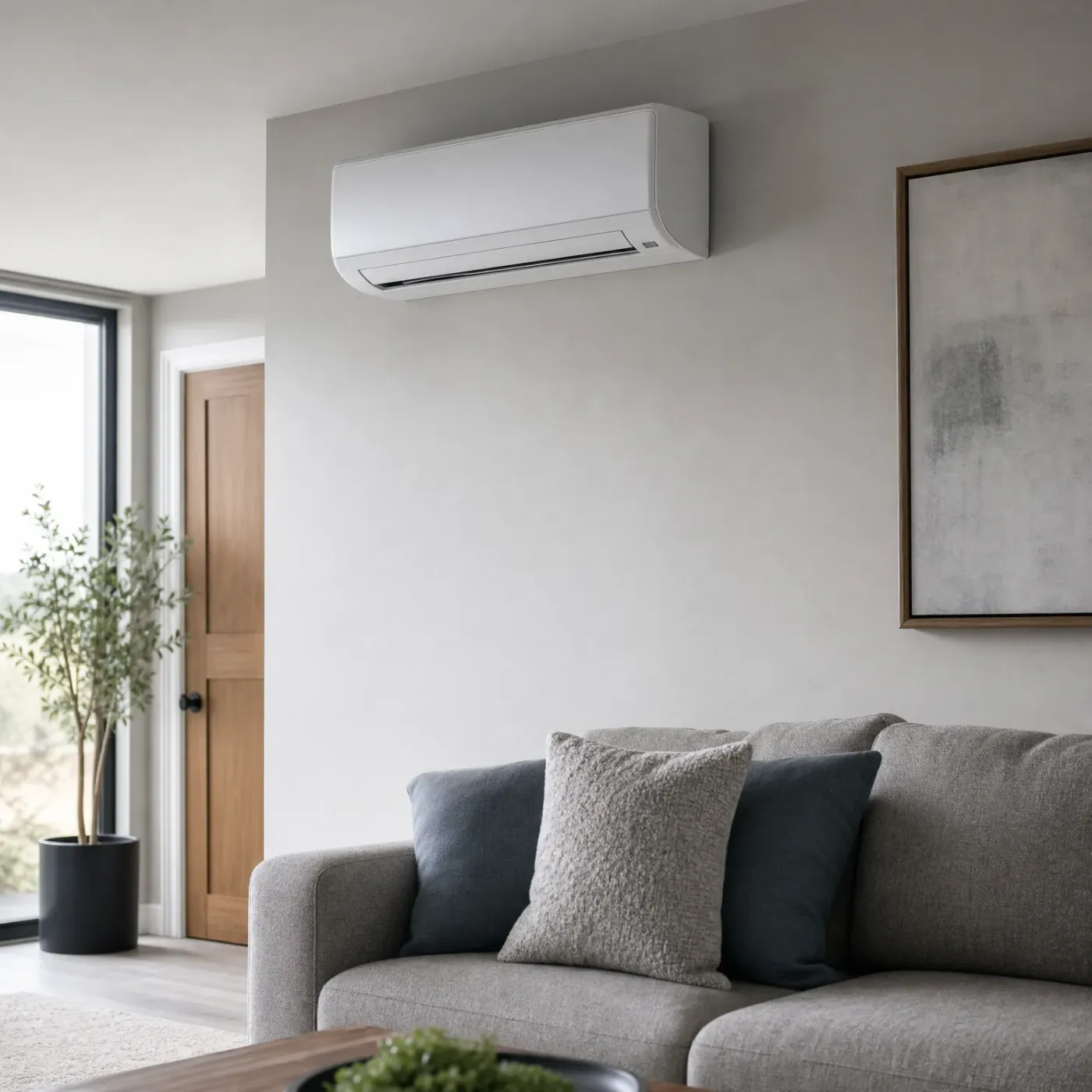
A white wall-mounted mini-split air conditioner on a light gray wall above a gray sofa with cushions, with a framed abstract artwork at right, a wooden door and potted plant at left.

Skip the calls to every shop

Your request goes to one pro, not a list of companies.

Answer a few questions instead of calling shop after shop.

Find a licensed pro

Asking costs nothing, and the choice to hire stays yours.

A white wall-mounted mini-split air conditioner on a beige interior wall, with a cream curtain and window at left, a potted plant on a ledge at right, and a wood floor below.
A mini split that's running right cycles quietly, with warm air moving steadily out of the indoor head.
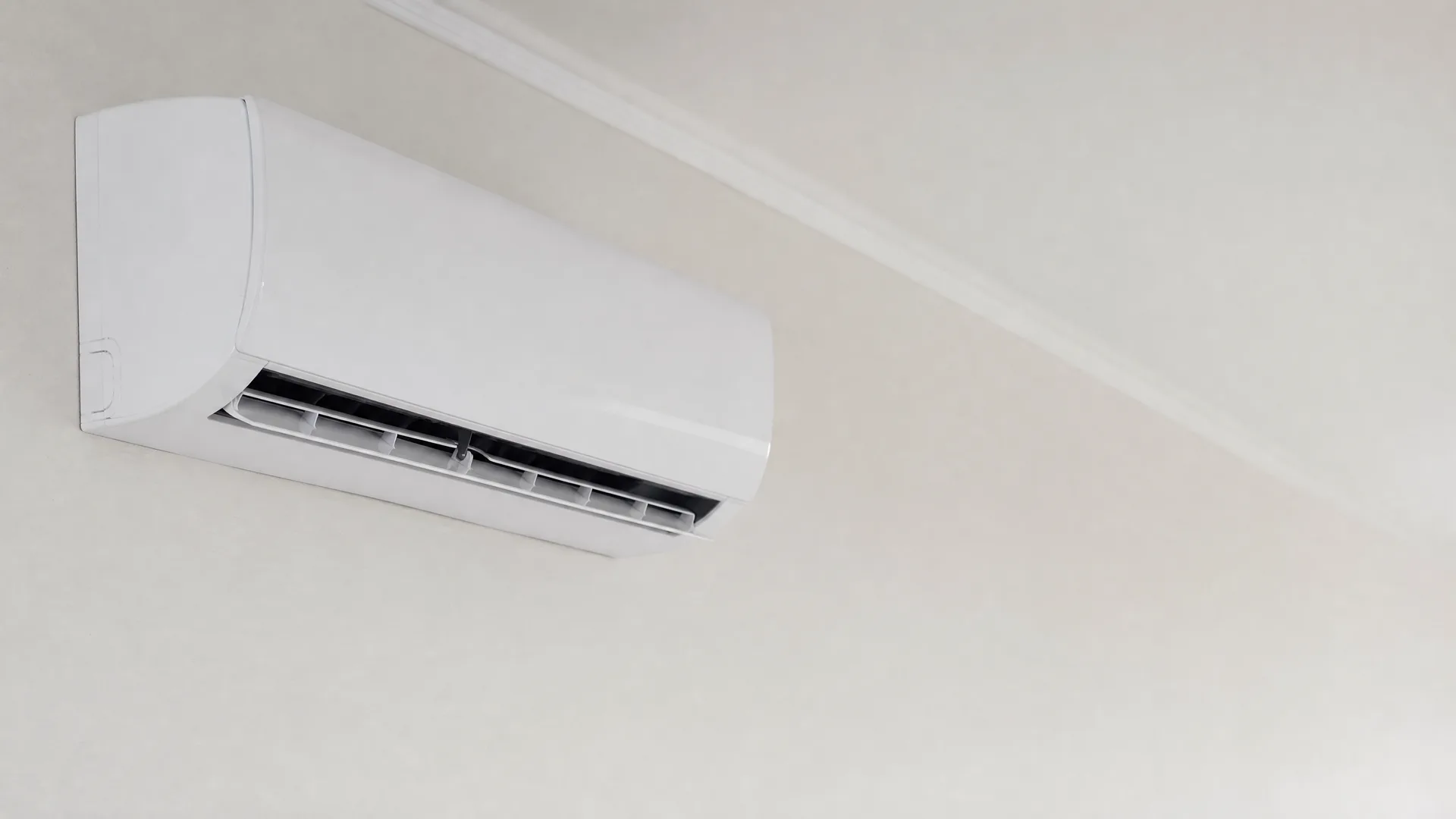
A dusty, discolored white wall-mounted mini-split air conditioner unit installed high on a plain interior wall below a white ceiling molding.
Dust caked across the top panel and vents like this blocks airflow and makes the unit work harder to keep up.
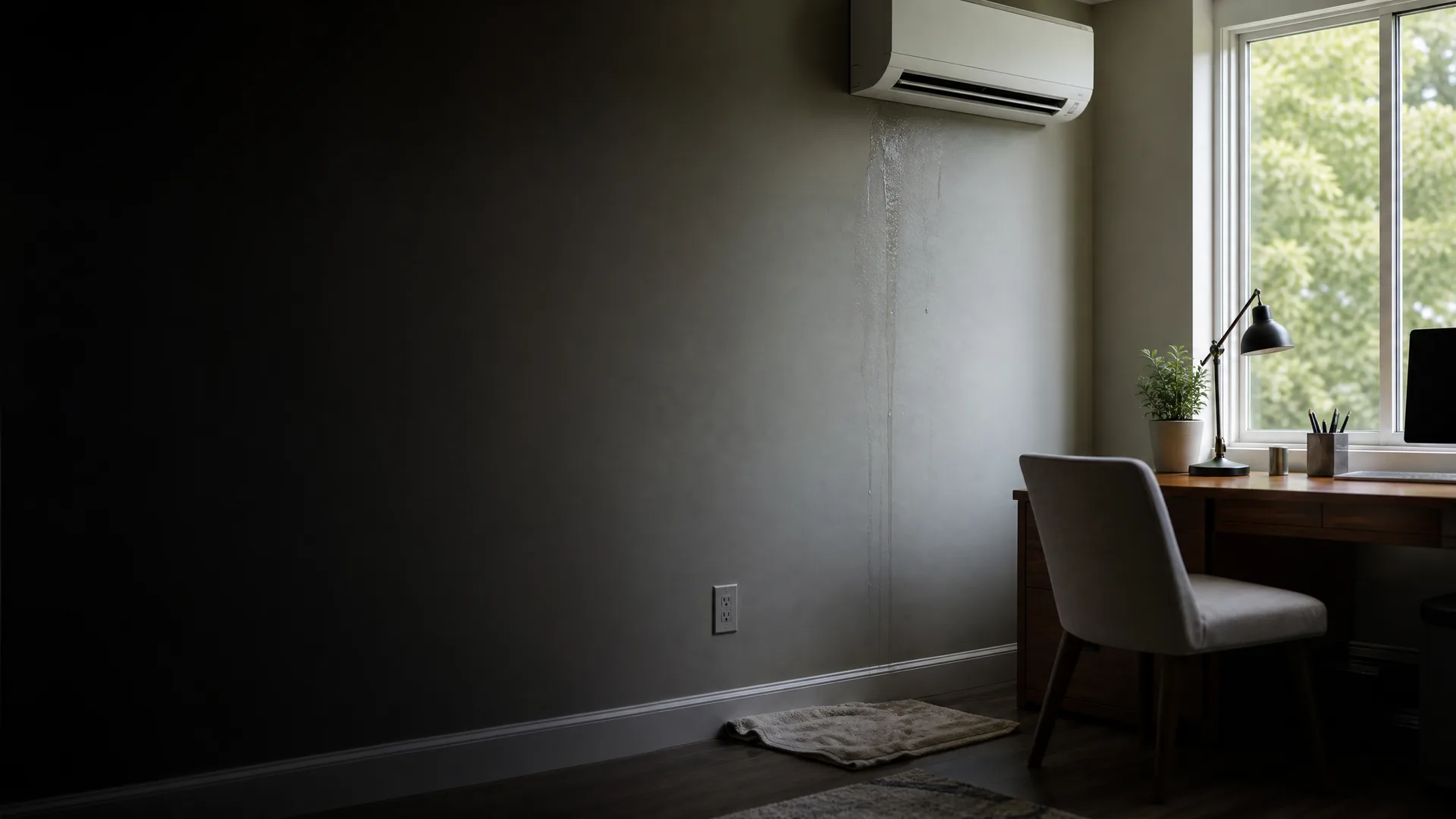
A dim room with a wall-mounted mini-split air conditioner above a vertical water stain running down the wall to a towel on the floor, with a desk, chair, lamp and potted plant beside a window.

August, mid-afternoon, and the home office is warm enough that you'd notice even without looking up. You do look up, because something's dripping. A streak runs down the wall below the indoor unit, dark against the paint, and it's pooled on the floor under the towel you grabbed twenty minutes ago when you first saw it starting. The mini split is still blowing air. Outside, it's the kind of dry Montana heat that makes you want the room cool and quiet, not wet. You press the remote to shut it off and the drip keeps going anyway, slower now, finding the same low spot on the baseboard it found before.


A closed silver laptop and a glazed ceramic mug on a wooden table, with a blurred kitchen counter, potted plant, cutting board and window in the background.

What's actually happening inside the unit when it won't start

A mini split that refuses to power on in deep cold is usually protecting itself. The control board runs a check before it lets the compressor start, and if the outdoor coil temperature sensor reports something out of range, the board holds the whole system off rather than let the compressor try to run against an iced-up coil. That's the lockout you're seeing. It isn't random and it isn't the remote battery. It's the board doing exactly what it was built to do when conditions outside go past what the system can handle.

Telling a technician that much over the phone gets you a faster visit than describing a blinking light and hoping they guess. A contractor who works on mini splits in Montana winters all season has likely seen this exact lockout on this exact brand more than once, and knows whether it's the defrost sensor, the board itself, or ice that needs clearing before anything else gets tested. Sorting that out yourself, or calling around to find someone who knows these units instead of only central furnaces, is the part you don't have to do.

A dark ceramic mug on a round wooden table beside a light grey sofa with a woven cushion and knit throw, with a window, potted plant, floor lamp and wooden cabinet blurred in the background.
A white wall-mounted mini-split air conditioner near the ceiling of a room with light gray walls, white crown molding, and a beige curtain at the left edge.

Clean and running

Mounted up near the ceiling, the indoor head sits white and clear, no streaks on the wall under it. Warm air moves out steadily when you press the remote, and the panel and vents are free of dust. Nothing about the unit calls attention to itself, which is what you want from it.

A dusty beige wall-mounted mini-split air conditioner indoor unit installed high on a plain light-colored wall below the ceiling.

Caked and stained

Grime has built up thick across the top panel and the vents, and the wall above shows a dark stain spreading from the unit. Dust like this blocks airflow through the coil and makes the unit run harder for less heat. Left alone, it's part of why a mini split starts failing when the cold hits hardest.

Power costs 12.99 cents per kilowatt-hour statewide

At 12.99 cents a kilowatt-hour, running the mini split itself isn't the expensive part. A repair call that drags on, or a unit that stays down while the backup gas heat picks up the slack in rooms it wasn't sized for, costs you more than the power ever will.

EIA-861 2025 statewide residential average

A mini split that won't start in a hard freeze is doing what it's built to do when it can't pull heat out of air that cold, and the fix is in the outdoor unit, the sensor, or the board that's holding it back. Gas heat can carry the house while you wait, so there's no need to rush a space heater into every room. What matters is getting someone out who works on these units through a Montana winter and knows which part gives out first in weather like this. You're not sending the job to a handful of companies and fielding calls back from each one. One licensed contractor local to you takes it, already familiar with how this cold treats this equipment. Once that call connects, the part of this that's been on you, finding someone to trust with it, is done. The unit still needs the work. But you know where it stands, and so does whoever's coming to look at it.

Sunlit corner of a room with a wooden sideboard holding a ceramic vase of olive branches and a dark wooden bowl, beside a white-framed window, a hardwood floor and woven rug.
A wooden cabinet holding a pale ceramic vase with leafy branches stands beside a beige wall in a sunlit room with hardwood floors, a jute rug, and a window showing green foliage outside.
Sunlit room corner with a beige upholstered sofa holding a rust-brown cushion, beside floor-length linen curtains at a window, over a wood floor with a woven rug.
Corner of a room with beige walls, a framed photograph, a floor-length linen curtain beside a window, an upholstered armchair with a knit pillow, white baseboards and trim, wood flooring and a pale rug.
Sunlit living room corner with a beige upholstered armchair with a cushion, linen curtains beside a wooden-framed window, green vertical panelled wall with a framed print, and a wooden table edge over a woven rug.

Skip calling around

The pro who reaches out is licensed in Montana.

Find a local pro

No fee to send it, and nothing to sign.